
Our Projects
A snapshot of our work across land, water and habitat projects
The Job Outline
Upper Onny Farm Water Audits
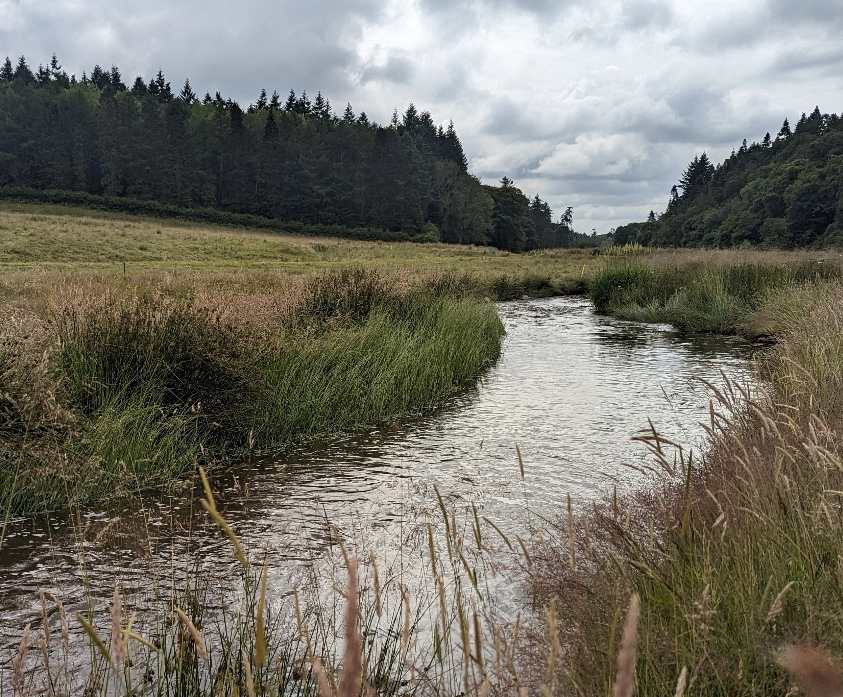
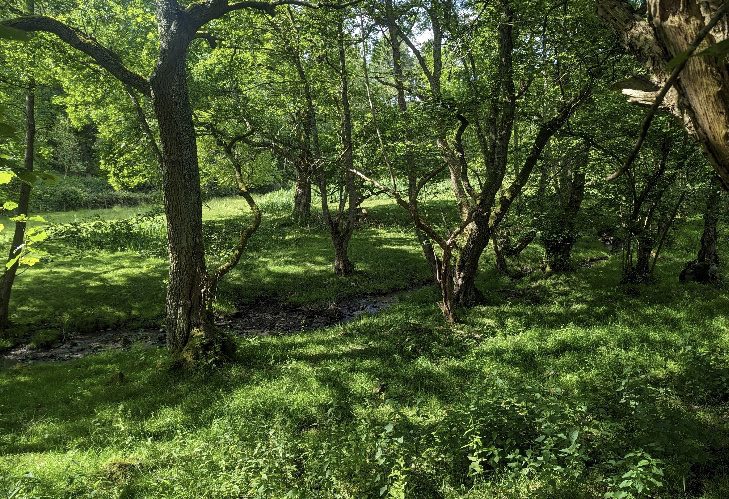
- Client – Shropshire Hills National landscape and Upper Onny farmers group.
- Location – Shropshire Hills.
- The Brief – Undertake farm water audits across 12 holdings to identify risks and opportunities for the freshwater environment. Findings to be presented in clear and concise reports.
The Detail
Agricultural land within the Shropshire Hills plays a crucial role in shaping water quality, sediment dynamics, and the resilience of downstream habitats. The focus area was characterised by pasture-based farms in a semi-upland environment. Water impacts everything in this part of the world. Freshwater is the primary livestock watering source, thin soils mean pasture is prone to drought stresses that can limit grazing availability, and increasingly volatile storms events can bring flooding to the local communities and impact farm activities.
Working closely with the farm group facilitator, our work started at the kitchen table of our 12 participating farms, where we took the time to understand the farm business, existing stewardship arrangements and aspirations for the future. Following this, the team took to the fields and undertook a detailed appraisal that identified existing ecological features, risk areas for pollution and opportunties for enhancement. Crucially, we wanted to identify capital interventions that would deliver multiple benefits for biodiversity, flood risk and water quality, without compromising farm business objectives. Measures identified included, installation of strategically located sediment traps, riparian buffers, renaturalising flow pathways through channel diversion/daylighting, and all manner of ponds, scrapes & wetlands. All recommendations included a works specification, indication of consenting requirements and potential sources of funding.
The Big Wins
More than 3000ha of land assessed
Nearly 100 opportunities for investors
£95k of funding secured by our charity arm
Opportunities for enhancement exist on EVERY farm
The Job Outline
Wetland restoration feasibility & design
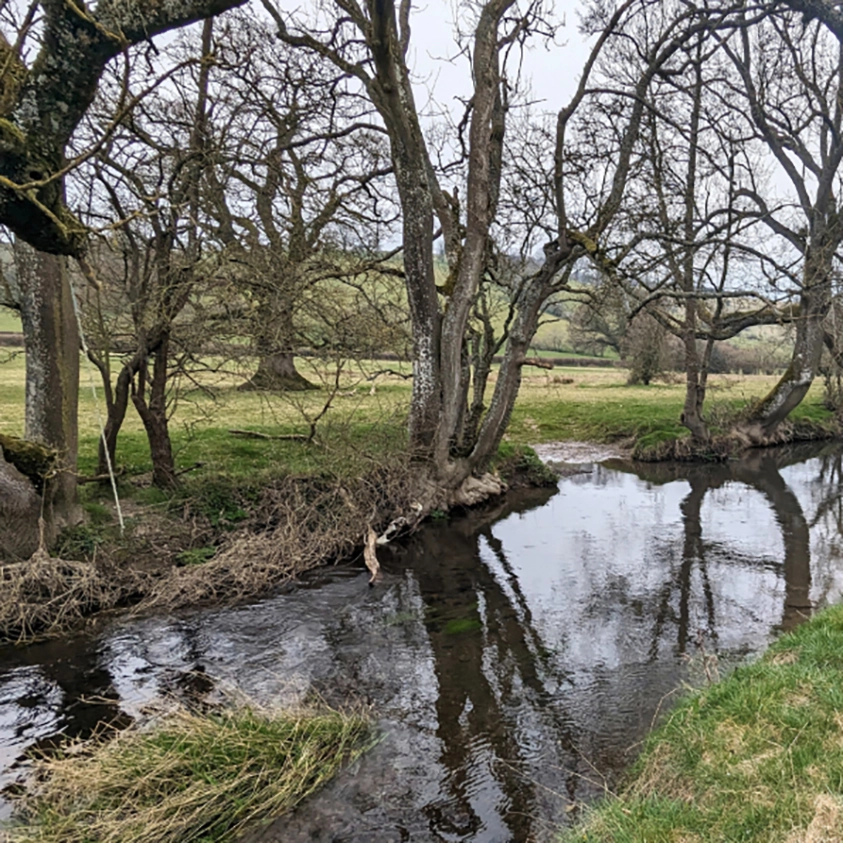
- Client – Natural England (Catchment Sensitive Farming)
- Location – Shropshire
- The Brief – Undertake an options appraisal of wetland creation opportunties on a farm holding located within the floodplain of the River Kemp to inform future Countryside Stewardships options. Report to include concept design, outline work specification and summary of considerations.
The Detail
Severn Rivers Ecology was commissioned by Natural England’s Catchment Sensitive Farming (CSF) Advisor to deliver a wetland feasibility and design study on a farm holding in Shropshire. The work was undertaken to inform options for a forthcoming Countryside Stewardship agreement, with a focus on delivering measurable benefits for biodiversity, water quality and catchment function.
The site is located on the banks of the River Kemp, a key tributary of the River Clun, which is designated as a Special Area of Conservation (SAC). The sensitivity of the receiving catchment required a robust, evidence-led approach to ensure that opportunities for enhancement were maximised while potential risks to designated features and priority species were carefully managed.
The project area comprises floodplain grazing and arable land adjacent to the River Kemp. Desk-based assessment and detailed site walkover surveys identified a range of ecological features and considerations that shaped the design process, including:
- The site’s importance for wading birds, notably lapwing, curlew and overwintering snipe.
- An area of botanically rich grassland, not mapped as a priority habitat but of clear local ecological value.
- Catchment priorities including agricultural diffuse pollution and habitat conditions for salmonids.
- Flood risk: Assessment of potential changes to flood storage and flow pathways to ensure no adverse impacts on downstream communities.
- Protected and priority species: Careful consideration of potential impacts on otter and water vole, particularly in relation to the existing paleochannel and watercourse margins.
- Grazing management: Development of long-term grazing recommendations to support the establishment of a diverse and structurally varied sward, maintaining suitability for breeding and wintering waders while preventing scrub encroachment.
Opportunity identification
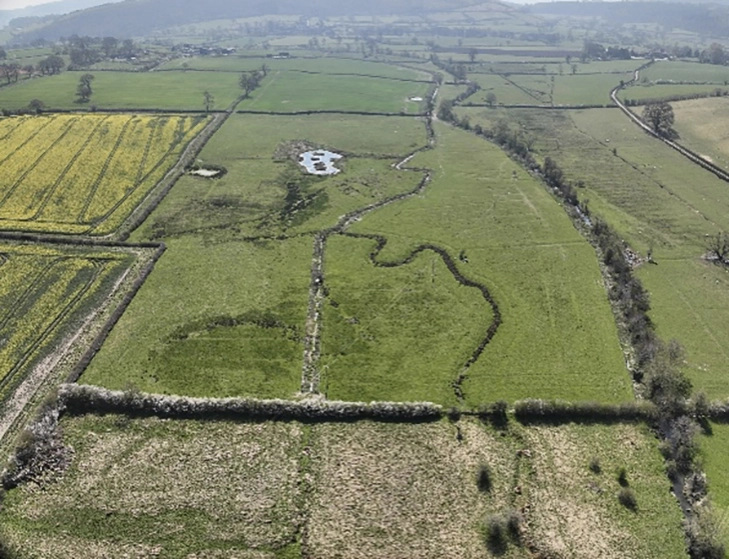
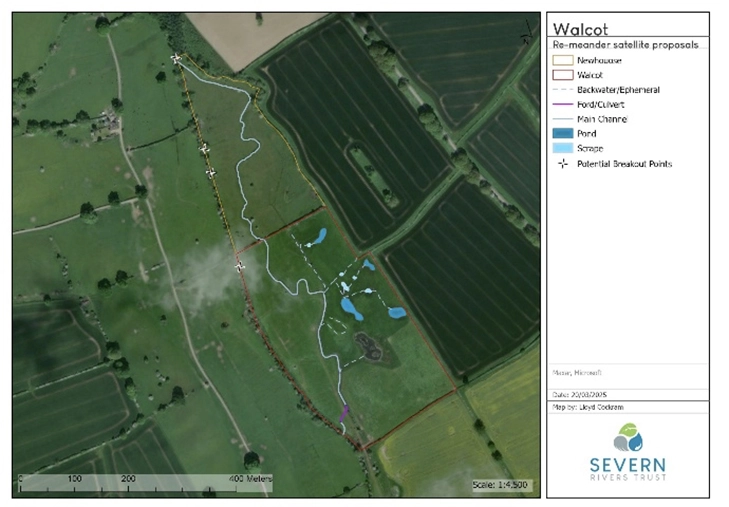
Initial site assessments quickly identified a historic paleochannel dissecting the floodplain. This well-defined depression represented the former meandering course of the River Kemp, extending for approximately 1.2 km.
The present-day river channel had been historically straightened, resulting in now limited in-channel habitat diversity and a reduced connection with the surrounding floodplain. Reconnection of the paleochannel was therefore identified as the principal opportunity for enhancement.
Design implications
A number of critical constraints and considerations were embedded into the feasibility and design process:
Outcomes
The study provided Natural England and the landowner with a clear, practical framework for wetland creation and river restoration, aligned with Countryside Stewardship objectives and the wider priorities of the River Clun SAC. Following preparation of the report, Severn Rivers Trust
worked collaboratively with the landowner, Natural England and the Environment Agency to secure funding and successfully delver the capital works on site, representing one of the most ambitious river restoration schemes in the Severn Basin.
The Big Wins
Higher tier scheme secured, with long term (20 year) floodplain management options informed by our restoration plan.
£150k of funding secured by our charity arm to deliver the scheme.
The Big Wins
More than 3000ha of land assessed
Nearly 100 opportunities for capital interventions identified
£95k of funding secured by our charity arm to deliver opportunities
Opportunities for enhancement exist on EVERY farm
The Job Outline
Upper Onny Farm Water Audits
- Client – Shropshire Hills National landscape and Upper Onny farmers group.
- Location – Shropshire Hills.
- The Brief – Undertake farm water audits across 12 holdings to identify risks and opportunities for the freshwater environment. Findings to be presented in clear and concise reports.
The Detail
Agricultural land within the Shropshire Hills plays a crucial role in shaping water quality, sediment dynamics, and the resilience of downstream habitats. The focus area was characterised by pasture-based farms in a semi-upland environment. Water impacts everything in this part of the world. Freshwater is the primary livestock watering source, thin soils mean pasture is prone to drought stresses that can limit grazing availability, and increasingly volatile storms events can bring flooding to the local communities and impact farm activities.
Working closely with the farm group facilitator, our work started at the kitchen table of our 12 participating farms, where we took the time to understand the farm business, existing stewardship arrangements and aspirations for the future. Following this, the team took to the fields and undertook a detailed appraisal that identified existing ecological features, risk areas for pollution and opportunties for enhancement. Crucially, we wanted to identify capital interventions that would deliver multiple benefits for biodiversity, flood risk and water quality, without compromising farm business objectives. Measures identified included, installation of strategically located sediment traps, riparian buffers, renaturalising flow pathways through channel diversion/daylighting, and all manner of ponds, scrapes & wetlands. All recommendations included a works specification, indication of consenting requirements and potential sources of funding.
The Job Outline
Wetland restoration feasibility & design
- Client – Natural England (Catchment Sensitive Farming)
- Location – Shropshire
- The Brief -Undertake an options appraisal of wetland creation opportunties on a farm holding located within the floodplain of the River Kemp to inform future Countryside Stewardships options. Report to include concept design, outline work specification and summary of considerations.
The Detail
Severn Rivers Ecology was commissioned by Natural England’s Catchment Sensitive Farming (CSF) Advisor to deliver a wetland feasibility and design study on a farm holding in Shropshire. The work was undertaken to inform options for a forthcoming Countryside Stewardship agreement, with a focus on delivering measurable benefits for biodiversity, water quality and catchment function.
The site is located on the banks of the River Kemp, a key tributary of the River Clun, which is designated as a Special Area of Conservation (SAC). The sensitivity of the receiving catchment required a robust, evidence-led approach to ensure that opportunities for enhancement were maximised while potential risks to designated features and priority species were carefully managed.
The project area comprises floodplain grazing and arable land adjacent to the River Kemp. Desk-based assessment and detailed site walkover surveys identified a range of ecological features and considerations that shaped the design process, including:
- The site’s importance for wading birds, notably lapwing, curlew and overwintering snipe.
- An area of botanically rich grassland, not mapped as a priority habitat but of clear local ecological value.
- Catchment priorities including agricultural diffuse pollution and habitat conditions for salmonids.
Opportunity identification
Initial site assessments quickly identified a historic paleochannel dissecting the floodplain. This well-defined depression represented the former meandering course of the River Kemp, extending for approximately 1.2 km.
The present-day river channel had been historically straightened, resulting in now limited in-channel habitat diversity and a reduced connection with the surrounding floodplain. Reconnection of the paleochannel was therefore identified as the principal opportunity for enhancement.
Design implications
A number of critical constraints and considerations were embedded into the feasibility and design process:
- Flood risk: Assessment of potential changes to flood storage and flow pathways to ensure no adverse impacts on downstream communities.
- Protected and priority species: Careful consideration of potential impacts on otter and water vole, particularly in relation to the existing paleochannel and watercourse margins.
- Grazing management: Development of long-term grazing recommendations to support the establishment of a diverse and structurally varied sward, maintaining suitability for breeding and wintering waders while preventing scrub encroachment.
Outcomes
The study provided Natural England and the landowner with a clear, practical framework for wetland creation and river restoration, aligned with Countryside Stewardship objectives and the wider priorities of the River Clun SAC. Following preparation of the report, Severn Rivers Ecology worked collaboratively with the landowner, Natural England and the Environment Agency to secure funding and successfully delver the capital works on site, representing one of the most ambitious river restoration schemes in the Severn Basin.
The Big Wins
Higher tier scheme secured, with long term (20 year) floodplain management options informed by our restoration plan.
£150k of funding secured by our charity arm to deliver the scheme.
The Job Outline
Upper Onny Farm Water Audits
- Client – Shropshire Hills National landscape and Upper Onny farmers group.
- Location – Shropshire Hills.
- The Brief – Undertake farm water audits across 12 holdings to identify risks and opportunities for the freshwater environment. Findings to be presented in clear and concise reports.
The Detail (site context)
Agricultural land within the Shropshire Hills plays a crucial role in shaping water quality, sediment dynamics, and the resilience of downstream habitats. The focus area was characterised by pasture-based farms in a semi-upland environment. Water impacts everything in this part of the world. Freshwater is the primary livestock watering source, thin soils mean pasture is prone to drought stresses that can limit grazing availability, and increasingly volatile storms events can bring flooding to the local communities and impact farm activities.
Working closely with the farm group facilitator, our work started at the kitchen table of our 12 participating farms, where we took the time to understand the farm business, existing stewardship arrangements and aspirations for the future. Following this, the team took to the fields and undertook a detailed appraisal that identified existing ecological features, risk areas for pollution and opportunties for enhancement. Crucially, we wanted to identify capital interventions that would deliver multiple benefits for biodiversity, flood risk and water quality, without compromising farm business objectives. Measures identified included, installation of strategically located sediment traps, riparian buffers, renaturalising flow pathways through channel diversion/daylighting, and all manner of ponds, scrapes & wetlands. All recommendations included a works specification, indication of consenting requirements and potential sources of funding.
The Job Outline
Wetland restoration feasibility & design
- Client –Natural England (Catchment Sensitive Farming)
- Location – Shropshire
- The Brief – Undertake an options appraisal of wetland creation opportunties on a farm holding located within the floodplain of the River Kemp to inform future Countryside Stewardships options. Report to include concept design, outline work specification and summary of considerations.
The Detail (site context)
Severn Rivers Ecology was commissioned by Natural England’s Catchment Sensitive Farming (CSF) Advisor to deliver a wetland feasibility and design study on a farm holding in Shropshire. The work was undertaken to inform options for a forthcoming Countryside Stewardship agreement, with a focus on delivering measurable benefits for biodiversity, water quality and catchment function.
The site is located on the banks of the River Kemp, a key tributary of the River Clun, which is designated as a Special Area of Conservation (SAC). The sensitivity of the receiving catchment required a robust, evidence-led approach to ensure that opportunities for enhancement were maximised while potential risks to designated features and priority species were carefully managed.
The project area comprises floodplain grazing and arable land adjacent to the River Kemp. Desk-based assessment and detailed site walkover surveys identified a range of ecological features and considerations that shaped the design process, including:
- The site’s importance for wading birds, notably lapwing, curlew and overwintering snipe.
- An area of botanically rich grassland, not mapped as a priority habitat but of clear local ecological value.
- Catchment priorities including agricultural diffuse pollution and habitat conditions for salmonids.
Opportunity identification
Initial site assessments quickly identified a historic paleochannel dissecting the floodplain. This well-defined depression represented the former meandering course of the River Kemp, extending for approximately 1.2 km.
The present-day river channel had been historically straightened, resulting in now limited in-channel habitat diversity and a reduced connection with the surrounding floodplain. Reconnection of the paleochannel was therefore identified as the principal opportunity for enhancement.
Design implications
A number of critical constraints and considerations were embedded into the feasibility and design process:
- Flood risk: Assessment of potential changes to flood storage and flow pathways to ensure no adverse impacts on downstream communities.
- Protected and priority species: Careful consideration of potential impacts on otter and water vole, particularly in relation to the existing paleochannel and watercourse margins.
- Grazing management: Development of long-term grazing recommendations to support the establishment of a diverse and structurally varied sward, maintaining suitability for breeding and wintering waders while preventing scrub encroachment.
Outcomes
The study provided Natural England and the landowner with a clear, practical framework for wetland creation and river restoration, aligned with Countryside Stewardship objectives and the wider priorities of the River Clun SAC. Following preparation of the report, Severn Rivers Trust
worked collaboratively with the landowner, Natural England and the Environment Agency to secure funding and successfully delver the capital works on site, representing one of the most ambitious river restoration schemes in the Severn Basin.